
Why I Started Researching Lime Trees in Containers
Living in Southwest Florida, citrus seems like an obvious thing to grow. But after reading about the devastating pests and diseases that have damaged much of Florida’s citrus industry, I started to wonder if growing citrus successfully at home was even realistic.
Limes in particular — especially Key Limes — are a fruit I’ve always wanted to grow. They’re incredibly useful in the kitchen, and more importantly for me, they make some of the best margaritas I’ve ever had. Those little fruits pack a serious punch, and the idea of eventually having a few productive lime trees in my backyard was high on my list.
At the same time, I quickly realized my soil is extremely sandy. Planting trees directly in the ground felt like a big commitment, especially when I wasn’t fully sure how well citrus would perform in my yard.
So before putting anything permanently in the ground, I started researching whether lime trees could be grown successfully in containers instead.
Some links on this page may be affiliate links. If you purchase through these links, I may earn a small commission at no additional cost to you. This helps us continue to bring you content.
Can Lime Trees Grow in Containers in Hot Climates?
Apparently yes. My results are still forthcoming, but during my research I watched dozens of videos on YouTube from a few favorite channels, one of which is Fruitful Trees.
Lime Tree Varieties I Considered
When researching lime trees for containers, I found that several different types are commonly available. Each variety has different growth habits, flavors, and levels of cold tolerance. Since my main goal is fresh limes for drinks (especially margaritas), flavor mattered just as much as growth performance.
I also tried to identify dwarf versions of these lime trees. Unfortunately, not all varieties were available in dwarf form, likely because they are so popular. If you cannot find a dwarf variety, that’s fine, it should still grow well in a pot and the tree height will be contained by pruning and the container size.
Here are the four varieties I found while researching.
Persian Lime
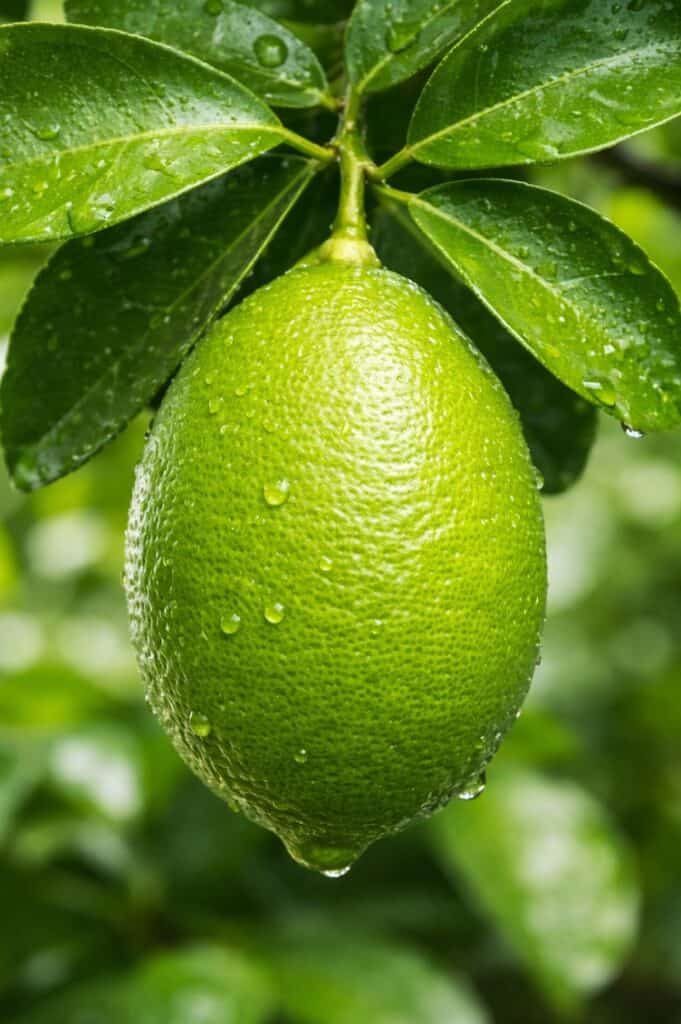
The Persian lime is the variety most people recognize from grocery stores. It produces larger, seedless fruit and tends to be easier to grow than many other lime varieties.
Persian lime trees are also more tolerant of cooler temperatures than true Key limes, which is one reason commercial growers prefer them. The trees grow larger and more vigorously, making them a good choice for in-ground planting or very large containers.
The flavor is milder and less acidic than Key limes, which some people prefer for cooking and drinks. However, if you’re chasing that strong, classic lime flavor used in traditional margaritas and Key lime pie, Persian limes don’t quite have the same punch. Plus, one of my favorite places to get a margarita claims Key limes are the secret to a fantastic margarita, and I think they’re right.
Mexican Key Lime
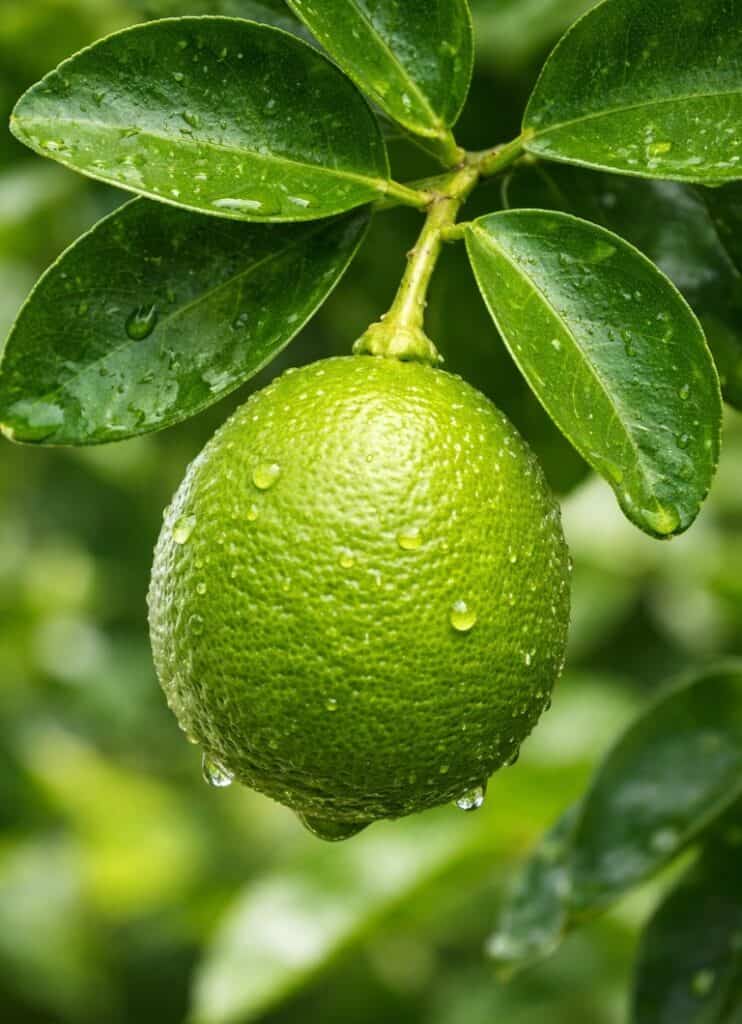
The Key lime — also called the Mexican lime — is the classic lime used in traditional Key lime pie and many cocktail recipes like my personal favorite, margarita on the rocks (no salt).
Compared to Persian limes, the fruit is far smaller, more aromatic, and noticeably more acidic. That stronger flavor is exactly why many people prefer them for drinks like margaritas.
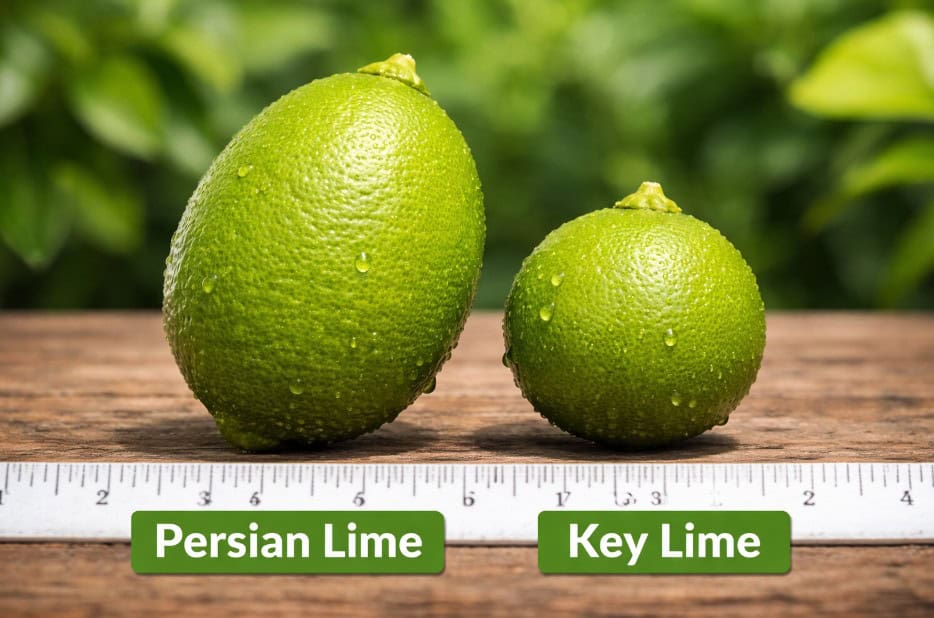
Key lime trees tend to stay somewhat smaller than Persian limes, which makes them more suitable for container growing. However, they are also more sensitive to cold temperatures and can be slightly more delicate overall.
I did Most Mexican lime trees also have sharp thorns, which can make pruning and harvesting a little more challenging. I’m not too worried about this as I follow a “no pain, no gain” mantra. Just kidding, I’ll wear gardening gloves or watch where I stick my hands.
Thornless Key Lime
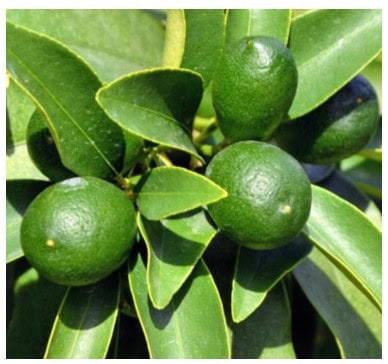
Thornless Key limes are essentially a cultivated variation of the traditional Mexican lime. They produce fruit that is very similar in flavor to standard Key limes but with a major advantage: significantly reduced thorns. The ideal combo for containers is a thornless and dwarf variety of key lime.
For home gardeners, the lack of thorns can make maintenance a bit easier. Pruning, harvesting, and just general handling are much less painful when you’re not constantly dealing with long citrus thorns.
Growth habits are generally similar to standard Key limes, and the trees can still produce the same small, intensely flavored fruit that makes them popular for cocktails and cooking.
This is one of the varieties I ultimately decided to try because it keeps the flavor profile I wanted while being easier to manage.
Kaffir Lime
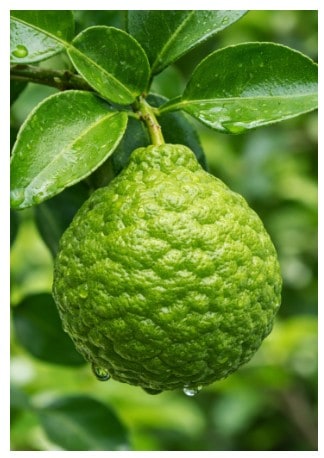
Kaffir lime trees are very different from the other varieties listed here. While they do produce small citrus fruit, the real reason most people grow Kaffir limes apparently is for their leaves. So don’t buy this one for the fruit!
The leaves are widely used in Southeast Asian cooking, especially in Thai cuisine. They have a very distinctive aroma and are commonly used in soups, curries, and sauces.
This was interesting for me to learn as I could have bought a tree that had zero value for the fruit, which would have NOT made for a good margarita. So, buyer beware, not all fruit trees are intended to use the fruit.
That said, my research indicates Kaffir lime trees can grow well in containers and tend to stay relatively compact, which makes them a good candidate for patio or container growing in warm climates.
Where I Looked to Buy Lime Trees
Living in Florida, there are restrictions on buying citrus trees in order to help contain the spread of pests and diseases that have devastated much of the state’s citrus industry. Because of this, only certain approved retailers and farms are allowed to sell citrus trees. Some commercial growers don’t even allow retail foot traffic on their farms out of concern that visitors could unintentionally introduce diseases that might wipe out their entire stock of plants.
After a good amount of research, I realized I had a choice (and you probably will too). I could either drive to a reputable local nursery or order from one of the few online citrus nurseries that are licensed to ship trees within the state.
One option for me was driving to Fruitscapes, a well-known citrus nursery west of Cape Coral. Buying locally from a nursery that sells high-quality trees grown on known rootstock is probably the ideal scenario. For me, though, that would mean about a 65-minute drive each way, plus the challenge of fitting multiple trees into my not-so-big SUV. I was already imagining pots tipping over and branches getting damaged during the drive home.
So instead, I started investigating online nurseries that ship citrus trees within Florida. Two names kept coming up during my research: Everglades Farm and Brite Leaf Citrus Nursery.

In the end, I chose Brite Leaf Citrus Nursery for one simple reason — they clearly list the rootstock used for their trees, and most of the research I found suggested they take excellent care in growing and shipping their plants.
With my nursery selected, I ordered a Thornless Key Lime (non-dwarf) and a Mexican Key Lime (dwarf variety). The Thornless Key Lime is grafted onto a standard rootstock, while the Mexican Key Lime is grafted onto a dwarfing rootstock (US-897).
The difference in rootstock was one of the things that interested me most. A standard rootstock should produce a more vigorous tree, while the dwarfing rootstock is designed to keep the tree smaller and more manageable — something that could be important when growing citrus in containers.
My plan is to grow both trees in containers and see how they perform in the Southwest Florida heat.
Supplies I Bought Before the Trees Even Arrived
Containers
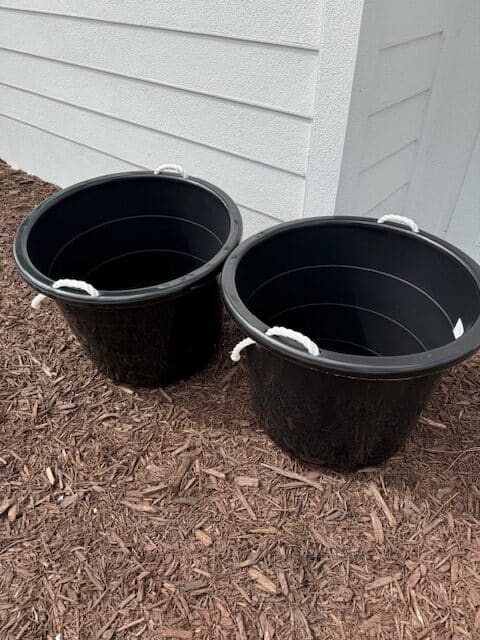
These plants will arrive in 3-gallon nursery containers and will likely need to be transplanted almost immediately into at least a 5-gallon bucket. Note: a 5-gallon bucket from Home Depot actually holds more soil than a standard 5-gallon nursery container (this video from the Millennial Gardner explains it).
While a 5 gallon bucket works, it wouldn’t buy me much time until I have to transplant them again into something bigger, which would ultimately just slow down the plant growth. So after much research and disappointment with the cost of larger size containers, I went a different route. I found these black 17-gallon storage tubs on Walmart for about $9 each. I ordered two and received them the next day. They are solid (not flimsy), have a nice rope pull and even appear like a landscape container. I will simply drill some drainage holes in the bottom sides around the edge and these should work well.
Note: These are black and I expect they will absorb quite a bit of heat. However all commercial landscape pots are also black, so I figure they wouldn’t make those black if the plants wouldn’t survive in them. Time will tell and I’ll let you know how these trees do at regular intervals.
Soil Mix
There’s a lot of opinions out there on this topic and I think there’s more than one right or wrong answer. I ended up going to my local Walmart and picking up some pine bark mulch, pine bark chunks, and peat moss. Unfortunately my Walmart (and local Home Depot / Lowes) did not have any pine bark mini nuggets.
Unfortunately the pine bark chunks were much larger than I wanted, some 3″ to 4″ long, so I broke up what I could into smaller chunks but it wasn’t perfect. If I could do it over again, I would just get the pine bark mulch as it had a mix of different sizes, from a fine material, shredded material all the way up to small 1/2″ nuggets.
Fertilizer
I haven’t purchased any fertilizer yet because my understanding is a brand new transplated citrus tree does not need fertilization immediately. I also read this same point on the Brite Leaf Citrus Nursery site that you do NOT want to mix fertlizer in with the soil. I plan to sprinkle a little citrus fertilizer on the top of the plants a few weeks post-transplate, and will experiment with the frequency.
Next Post: Tree Quality and Repotting
I should receive the trees via UPS anyday now, so when I do, I will post some pictures about how they look when they arrived and my experience re-potting them into larger pots.