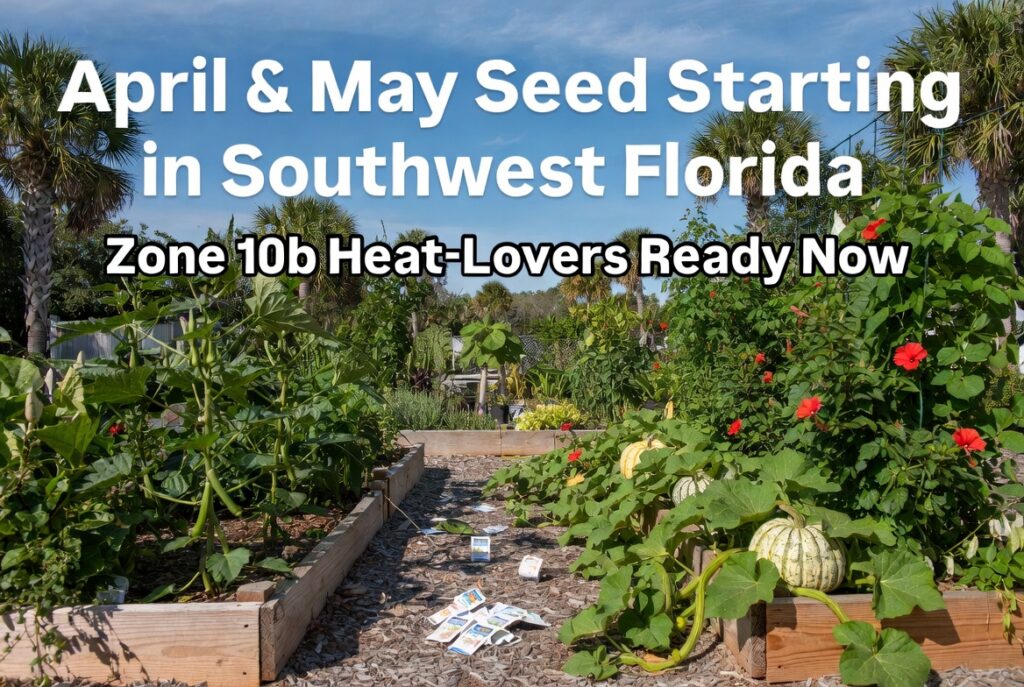
April & May Seed Starting in Southwest Florida

seeds to start in southwest florida in April and May

Your Zone 10b Guide to Summer Heat-Lovers

Hey Southwest Florida gardeners. If you are in zone 10b, April and May mark that exciting transition from the milder dry season into the hot, humid, rainy summer that shapes our growing year.

While gardeners up north are just getting started with tomatoes, we are already deep into warm-season planting. Summer here brings daily thunderstorms, caterpillar pressure, fungal issues, and sandy soil that leaches nutrients fast. But this is the perfect window to start the tough, Florida-adapted crops that thrive in our heat and humidity.

As your local food farmer who battles these conditions every season, here is exactly what you can and should start from seed right now for strong summer-to-fall harvests.

Soil Reality Check Before You Sow a Single Seed

In Southwest Florida, your biggest challenge is not the temperature. It is our sugar-sand soil that drains quickly and holds almost no nutrients. Skip good soil prep and even the strongest varieties will struggle.

Quick fix:

  • Mix raised beds or containers with 50 to 70 percent compost or pine bark plus native sand.
  • Top with 3 to 4 inches of mulch to keep roots cool and moisture steady.
  • Feed every 2 to 3 weeks with slow-release organic fertilizer or compost tea.

Do this and your plants will reach the size and flavor you want.

Top Crops to Start from Seed in April and May

Most of these love warm soil and do best direct-sown right now. No indoor starts or heat mats needed. Focus on these heat-tolerant champions.

  • Okra Direct-sow now through November. It handles 95-degree days and humidity with ease. Harvest young pods every other day for nonstop production. One of the most reliable summer winners in Southwest Florida.
  • Southern Peas (Black-Eyed Peas, Cowpeas, Yard-Long Beans) Direct-sow April through July. These are drought-tolerant, heat-loving, and great nitrogen-fixers for your soil. Easy to shell and dry for storage.
  • Seminole Pumpkin A true Florida heirloom squash. Direct-sow April through July. The vines handle humidity, disease, and storms like pros. Sweet, edible fruits store for months and work great for soups, pies, or roasting.
  • Winged Beans Direct-sow now. High-protein pods, leaves, and flowers are all edible. These thrive in our wet heat and climb nicely on trellises.
  • Roselle Hibiscus Direct-sow April through August. Grow it for the tart, cranberry-like red calyces perfect for tea, jelly, or syrup. Plants grow vigorously in summer with almost zero care once established.
  • Tropical “Spinaches” (Malabar, New Zealand, Okinawa, Longevity, Seminole) Direct-sow or start in trays now. These actually love our heat and humidity unlike regular spinach, which bolts quickly. Enjoy cut-and-come-again harvests all summer long.
  • Pigeon Peas Direct-sow or start in trays. Fast-growing perennial bushes that give you peas and act as living mulch and nitrogen fixers.
  • Basil and Heat-Loving Herbs Direct-sow basil (especially Thai or holy basil) every 2 to 3 weeks. Mexican tarragon, Cuban oregano, and lemongrass also take off right now.

Pro Tips for Summer Success in Southwest Florida

  • Succession sow every 2 to 3 weeks so you never run out of fresh pods and greens.
  • Use 30 to 50 percent shade cloth during the worst afternoon heat and thunderstorms.
  • Water deeply but let the top inch of soil dry out between waterings to prevent root rot.
  • Scout daily for hornworms and other caterpillars. They explode this time of year.
  • Grow in raised beds or containers so you can control drainage and soil quality.

Summer gardening in zone 10b is not about forcing cool-season crops. It is about embracing the plants that were made for our climate. Plant okra, Seminole pumpkin, southern peas, winged beans, roselle, and those tough tropical greens now. You will be harvesting fresh food straight through the hottest months while many other gardens slow down.

Head over to TheSeedClub.com and grab your seeds. These heat-loving, Florida-friendly varieties are exactly what your garden needs right now.

What are you starting this month in your Southwest Florida garden? Drop your plans in the comments. I read every one and love swapping tips with fellow growers.

Happy planting. Stay sweaty, and keep those beds producing.

My First Zone 10b Spring: 10 Heat-Loving Plants I’m Trying in March 2026 (Wish Me Luck!)

Hey folks—still super new to Zone 10b gardening here in early March 2026. The weather’s already feeling summery (mid-80s and climbing), soil’s warming up, and no frost in sight. I’m excited but keeping expectations realistic—you never know how things will handle the incoming heat and humidity until you try!

I hate okra (slimy texture is a no for me), and I’m not big on tomatoes or eggplant either (taste/texture issues), so I’ve swapped those out. Sticking close to reliable Zone 10b picks from UF/IFAS guides and local Florida gardener advice: warm-season crops that love our long, hot growing window and can establish now before the real scorch hits. I’m going with a mix of veggies, herbs, beans, and a couple flowers for pollinators and fun.

Setup’s the same: raised beds/containers, full sun, good mulch to keep roots cool, consistent watering, and watching for pests. Here’s what I’m actually planting this month—fingers crossed for some wins!

1. Peppers

Peppers are a must for me—they’re tough, productive, and I love the flavor kick. March is perfect timing; they settle in with the warm soil and keep going for months.

Mixing it up: jalapeños, bells for milder stuff, cayenne for heat, and maybe a habanero if I feel adventurous. Super forgiving for beginners.

2. Cucumbers

Fast and fresh—cucumbers grow quick in our warmth, and starting now gives them time to vine before peak summer stress.

Trellising to save space, full sun, rich soil. Expecting slices in 45–60 days. If powdery mildew shows up, lesson learned!

3. Zucchini

Zucchini seems like it’ll explode here (in a good way). March planting should mean heavy yields early before heat slows production.

A couple plants from seed—harvest around 50 days. Ready for zucchini bread, grilling, or giving away extras!

4. Basil

Basil thrives in our heat—it’s basically foolproof and smells incredible. Planting in pots and interplanted for pollinators.

Pinch regularly for bushiness; fresh pesto and salads all season (hopefully). Great easy win for a first-timer.

5. Sweet Potatoes

These are heat champs and low-maintenance once going. Slips go in now for a fall harvest, but the vines grow fast and leaves are even edible!

Full sun, loose soil. Excited to try homegrown sweets—plus, they handle our sandy dirt well.

6. Southern Peas (like Black-Eyed or Crowder)

Southern peas (cowpeas) love hot weather and poor soil—perfect for Zone 10b summers. They’re nitrogen-fixers too, so good for the garden.

Bush or vining types; productive and drought-tolerant once established. Great side dish staple.

7. Yardlong Beans

These long-podded beans handle our humidity and heat way better than regular green beans. Super productive climbers.

Trellis them up—pods up to 2 feet! Fun and space-efficient for summer.

8. Sunflowers

Adding some non-edible joy: sunflowers for bees, beauty, and easy success.

Quick from seed, bloom in 70–90 days. They’ll help pollinate the veggies and make the garden look cheerful.

9. Zinnias

Zinnias for nonstop color and butterflies—dead easy in heat.

From seed now, blooms through summer/fall. Cut-flower bonus and pollinator magnets.

10. Malabar Spinach (or another tropical green)

Swapping in a heat-loving leafy: Malabar spinach (not true spinach, but climbs and thrives in our tropical vibe). It’s a great summer green substitute.

Vining, heat/drought tolerant—pick young leaves for salads. If it works, it’ll be a game-changer for greens in summer.

Wrapping Up My Adjusted First Zone 10b March Planting

Ditching okra, tomatoes, and eggplant keeps things enjoyable for me—no point forcing stuff I won’t eat! These picks align with what UF/IFAS and South Florida gardeners recommend for March: beans, cucurbits (cukes/zukes), peppers, basil, sweet potatoes, southern peas, yardlongs, and heat-tolerant flowers/greens like zinnias and Malabar spinach. They should root strong in this milder spring weather before the full summer blast.

I’m keeping it beginner-simple: mulch heavily, water deeply but not too often, maybe some organic fertilizer. Here’s to a fun, productive first hot-climate garden season.

(Feel free to tweak based on your space or tastes—happy planting, and good luck to us rookies!)